What Cordless Tools Does a Beginner Actually Need?
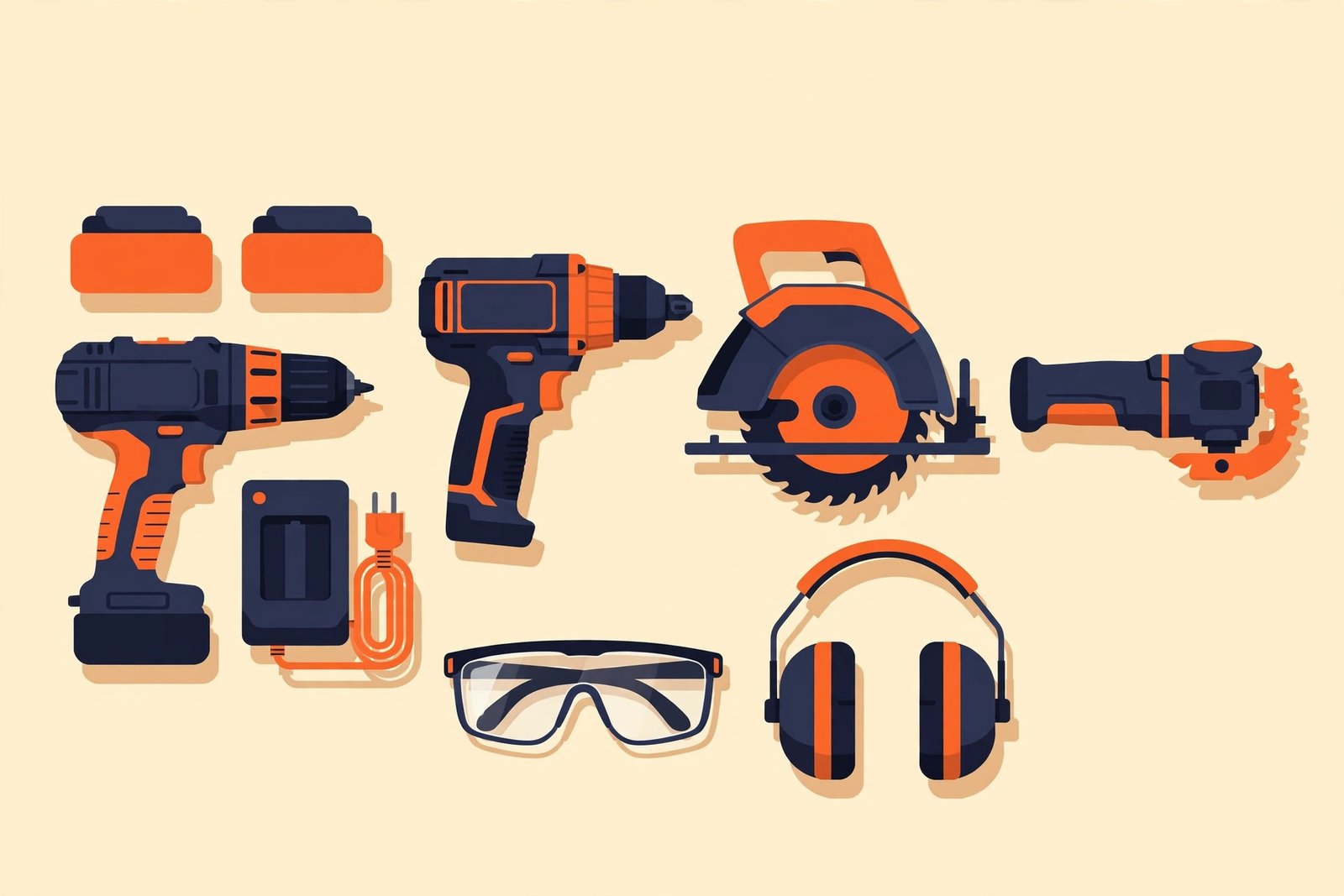
Quick answer: Start with one tool — a cordless drill/driver kit on an 18V/20V platform. Add an impact driver second, a circular saw third, and an oscillating multi-tool fourth. Everything else can wait until a real project demands it.
The mistake beginners make
Most beginners buy the wrong way: a big combo kit with eight tools, or one random tool per sale. The eight-tool kit looks like a deal, but half the tools sit unused while the batteries that came with it are too small for the tools you actually use. The one-tool-at-a-time approach is worse — you end up with three brands, three chargers, and batteries that do not fit each other.
The fix is a buying order. Buy tools in the order your projects demand them, and buy them all on one battery platform. Your first purchase is not really a drill — it is a vote for a battery system you will live with for years. Our platform comparison (DeWalt 20V MAX vs Milwaukee M18 vs Makita 18V LXT vs Ryobi ONE+ 18V) is coming next, and it covers that decision in full.
The 4 tools to buy first, in order
1. Cordless drill/driver — buy first, no debate
This is the tool that does the most jobs in a home: drilling holes in wood, metal, and plastic, driving everyday screws, assembling furniture, hanging curtain rods and shelf brackets, and installing cabinet hardware. If you buy one cordless tool, this is it.
Buy it as a kit (tool + two batteries + charger), not as a bare tool. Starting from zero, the kit is the only purchase that gets you working the same day. Look for a brushless motor, a 1/2-inch chuck, two batteries of 2.0 Ah or larger, and an 18V/20V platform. If you have not yet decided between a drill and an impact driver, read our drill vs impact driver guide first — the short version is drill first, impact driver second.
2. Impact driver — buy second, when screws get long
An impact driver only drives fasteners, but it does that one job far better than a drill. It drives long screws into hardwood with almost no wrist strain, thanks to a hammering mechanism that delivers very high torque in bursts. It is the right second tool when you start building a deck, a fence, shelving with long screws, or any framing work.
Buy it as a bare tool on the same battery platform as your drill. You already own the batteries and charger, so you only pay for the tool itself. That is the whole point of staying on one platform.
3. Cordless circular saw — buy third, when you start cutting lumber
A circular saw is the tool that turns you from an assembler into a builder: cutting plywood sheets, cutting studs and deck boards to length, and ripping boards down to width. A 6-1/2-inch or 7-1/4-inch cordless saw on your platform handles nearly all homeowner lumber work.
Wait to buy it until you have a cutting project planned. Until then, a handsaw or a store's cut service covers the occasional board. When you do buy, buy the bare tool on your platform, plus a good blade — the blade that ships in the box is rarely the blade you want to keep.
4. Oscillating multi-tool — buy fourth, the problem-solver
The oscillating multi-tool cuts, sands, scrapes, and grinds in tight spots where no other tool fits: trimming door jambs for flooring, cutting a hole in drywall for an outlet box, removing old grout or caulk, and sanding corners. No beginner thinks they need one — until the day nothing else fits.
It is fourth because it solves occasional problems rather than doing everyday work. But it is the tool that earns its place fastest once you own it, because it rescues projects that would otherwise stall.
Buy second: the next tier
Once the first four are earning their keep, these are the sensible next buys — again, as bare tools on your platform:
- Angle grinder — cutting and grinding metal, cutting tile and pavers, removing rust. Buy it when a metal or masonry project arrives, not before.
- Reciprocating saw — rough demolition, cutting branches, cutting pipes and studs in place. A demolition and pruning tool, not a precision tool.
- Jigsaw — curved and interior cuts in wood, laminate, and thin metal. Buy it when you start making furniture or decorative cuts.
- Random orbital sander — smoothing and finishing wood before paint or stain. Buy it when refinishing furniture or a deck.
Skip for now: what beginners should not buy yet
- A huge combo kit — unless you already have projects planned for at least four of its tools, a small kit plus one or two bare tools is cheaper and leaves you with better batteries.
- Specialty tools (nailers, routers, planers, polishers) — each is excellent at one job and useless until that job exists. Rent or borrow for a one-off project.
- A second battery platform — one great deal on another brand's tool is not a deal once you add its batteries and charger. One platform, until you have a real reason to add a second.
- Cheap no-name batteries — aftermarket batteries can damage tools, void warranties, and in the worst case overheat. Stick to the platform brand or a reputable, well-reviewed alternative.
How many batteries do you actually need?
Two batteries is the practical minimum: one in the tool, one on the charger. Three is comfortable once you own a saw, because saws drain batteries fast. More than that, and you are buying batteries instead of tools.
Battery size matters more than battery count. A 2.0 Ah battery is fine for a drill and an impact driver. Saws, grinders, and sanders want 4.0 Ah or larger — they pull more current and will drain a small battery in minutes. When your kit gives you a choice, take the kit with the larger batteries.
The starter checklist
| Buy in this order | Kit or bare tool? | When |
|---|---|---|
| 1. Drill/driver | Kit (tool + 2 batteries + charger) | First purchase |
| 2. Impact driver | Bare tool, same platform | When long screws appear |
| 3. Circular saw | Bare tool, same platform | When you start cutting lumber |
| 4. Oscillating multi-tool | Bare tool, same platform | When tight-space work appears |
| Safety: glasses, ear protection, dust mask, gloves | Buy with the drill | Before the first project |
Safety gear is not optional equipment — it is part of the starter kit. Safety glasses for every cut and every drilled hole, ear protection for impact drivers and saws, and a dust mask for sanding and cutting. These cost little and prevent the injuries beginners actually get.
FAQ
Do I need corded tools too?
For most homeowners, no. Modern 18V/20V cordless tools handle everything a beginner will do. Corded tools still win for all-day heavy work — grinding, sanding, or sawing for hours — but that is not a beginner's workload.
Can I mix brands?
You can, but you pay for it: each brand needs its own batteries and charger. Mixing makes sense only when one brand clearly makes the best version of a tool you need and the price gap is large enough to cover its batteries.
Is Ryobi good enough for a beginner?
Yes — that is exactly who it is made for. Its 18V ONE+ platform has the widest tool range at the lowest entry cost. DeWalt, Milwaukee, and Makita offer more power and durability if you plan to build heavily, but a beginner will not outgrow Ryobi on weekend projects.
Should I buy used tools?
Tools, sometimes — batteries, no. A used drill from a reputable brand can be a bargain, but used batteries have unknown charge cycles and may be near the end of their life. Buy batteries new.
Bottom line
Drill kit first, on one platform. Impact driver, circular saw, and oscillating multi-tool after — as bare tools, in that order, when a project calls for them. Everything else waits. That order saves you from the two classic beginner mistakes: a drawer full of tools you never use, and three chargers for three battery systems.
Next step: read our drill vs impact driver guide if you have not yet, then watch for the platform comparison — the decision that makes every purchase after the first one cheaper.